Blanche of Castile: Patronage, Piety, and Power is a proposed temporary exhibition at the Sainte-Chapelle that centres, for the first time, the woman who shaped much of Capetian art and kingship. Earlier exhibitions — Saint Louis at the Conciergerie (2014) and Le trésor de la Sainte-Chapelle at the Louvre (2001) — deepened our understanding of that material, but none centred on Blanche herself. This exhibition fills that gap by reading the rich visual and material evidence that survives — typology and narrative, heraldic symbols, the spatial logic of reliquary and monumental design — and by placing it in the crown jewel of Blanche’s architectural patronage and symbolic programme. It reunites illuminated manuscripts, reliquaries in precious metals, rare armour, and historical documents from collections across Europe and America, assembled in the building and around the patronage for which many were made, so that they become legible in ways that no conventional museum exhibit can achieve.
Browse the full exhbition online
Take a virtual tour of thirty exhibits and interactive displays.


The exhibition engages several questions at the forefront of current scholarship. First is the problem of attribution, making visible how art historians read material evidence when written records are few. Second is the question of female agency in medieval visual culture, where John Lowden’s analysis of the Toledo dedication page reveals a queen who is active and commanding while the king is passive. Third is the entanglement of devotion and intolerance, since the same manuscripts that express Blanche’s profound Marian piety also contain virulent anti-Judaic imagery, as Sara Lipton has explored. Blanche was attacked by contemporary chroniclers and satirists, perhaps for the simple fact of being a woman who governed — raising questions about legitimacy, gender in political criticism, who gets to rule and who gets remembered, that resonate well beyond the thirteenth century.


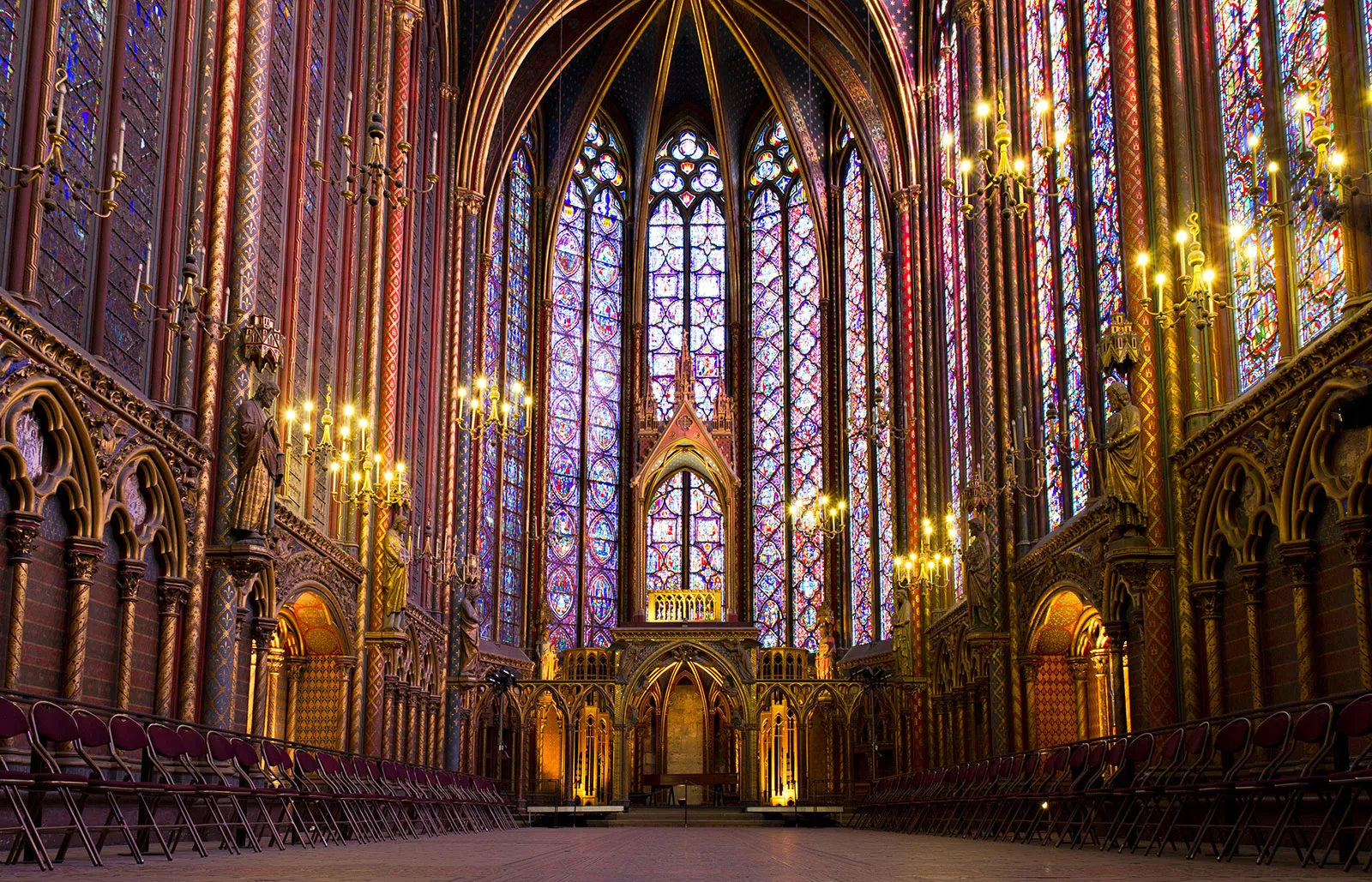
The three words of the subtitle name the interlocking characteristics of Blanche’s life still legible in the fabric of the building. The exhibition is arranged across the Lower and Upper Chapels, using the existing architectural divisions of the bays, with display cases predominantly behind existing guard rails so that little public circulation space is sacrificed and the Upper Chapel windows remain entirely unobstructed. The Lower Chapel introduces Blanche as patron, mother, and ruler through Patronage of Royal Monuments and Patronage of Lavish Manuscripts, culminating in the dedication page of the Toledo Bible Moralisée (Morgan Library, MS M.240, fol. 8r).


The Upper Chapel presents Piety, Power, Regency, and A Passion for Relics, bringing the recently restored Passion Relic windows to eye level, staging crusader-era armour beside a captured Almohad tapestry, and culminating in reliquaries displayed below the architectural surround that once held the Grande Châsse — the relics that were the focus of the entire project, purchased at a price exceeding the building itself. Multimedia and multisensory exhibit designs bring the world of Blanche to life through sound and scent as well as sight. Interactive audio stations play modern recordings of music written by and for Blanche, and an olfactory exhibit simulates the incense used in sacred ceremonies.


When Blanche lay dying in 1252, she had herself dressed in the coarse white cloth of a Cistercian nun at Maubuisson, the abbey she founded; her son Charles called her the sancta radix, the sacred root of the family. This exhibition offers the opportunity to show that Blanche’s life and work was more than just the root: it was a full blossoming of sacred rulership in medieval Paris.
This proposed exhibition was produced for The Courtauld MA History of Art. It is a fictional exhibition exploring a chosen theme unconstrained by real-world loan or conservation practicalities. It was designed around a curatorial argument supported by object selection, a letter to pitch the concept to decision-makers, and exhibition materials written to a defined audience.